There is a lot of stuff people hear and then keep repeating, but that has no actual basis other than it sounds plausible. I’m aware of one rigorous paper that, while not really focused on kitchen uses, found that the posited risks of lead from the nozzle and bacteria being trapped in the layers didn’t hold up. The author has a blog where they expand on it ad tedium.
For a candy dish, I don’t think it would be a problem at all. If you were using a 3D-printed bowl to eat porridge out of and not washing it… well, you might have other issues.
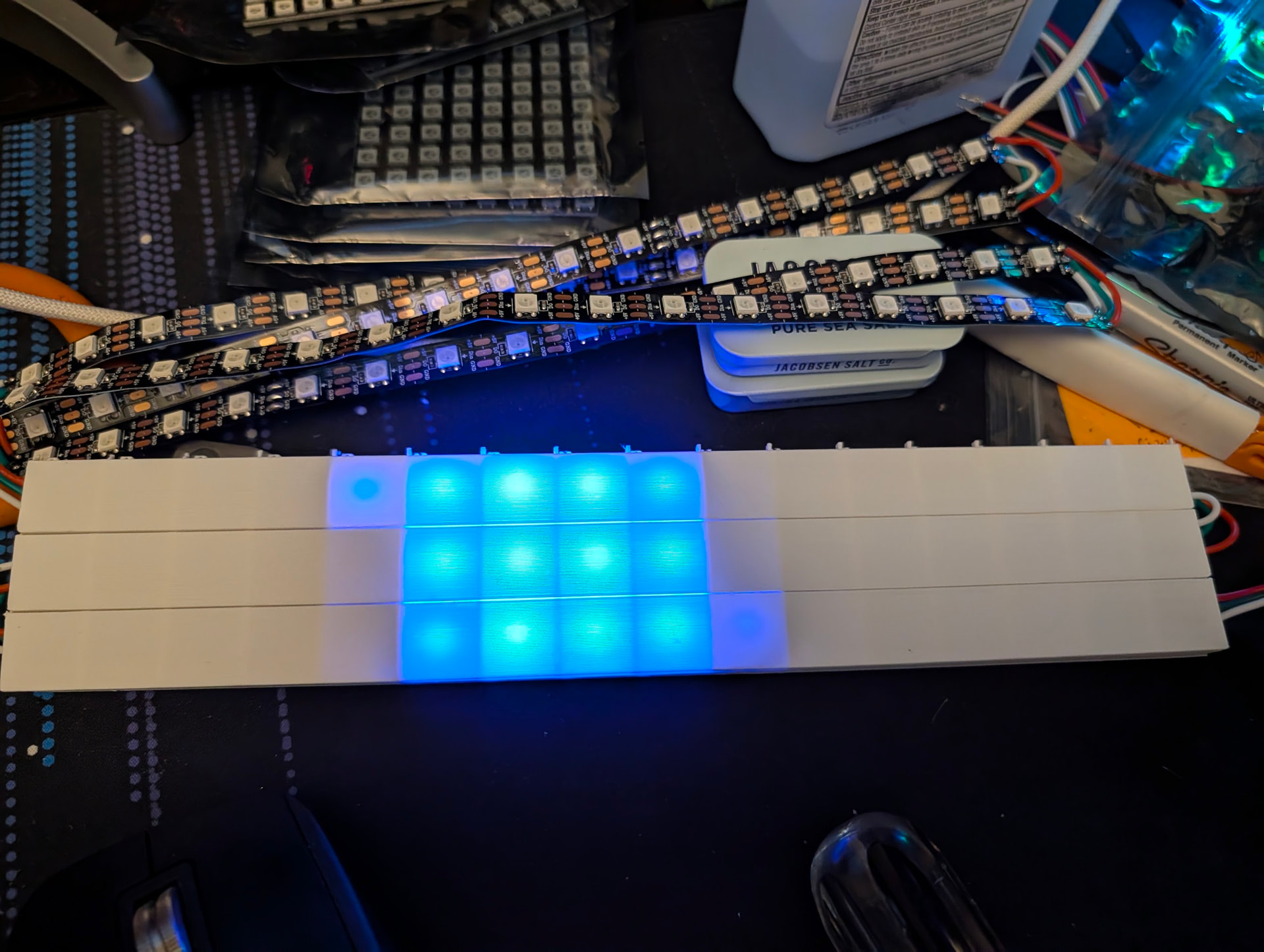
Sometimes I reach for a tool by habit instead of stepping back and thinking through my options. Will I convert this 3D-printed light panel into a laser cutter design instead of continuing to wait on multi-hour prints? Hmmm. I’ve got a design that works well, so maybe not. But maybe? The laser cutter is SO FAST compared to the 3D printer, but a good design (e.g. I like to avoid glue) can take significantly longer to lock down.
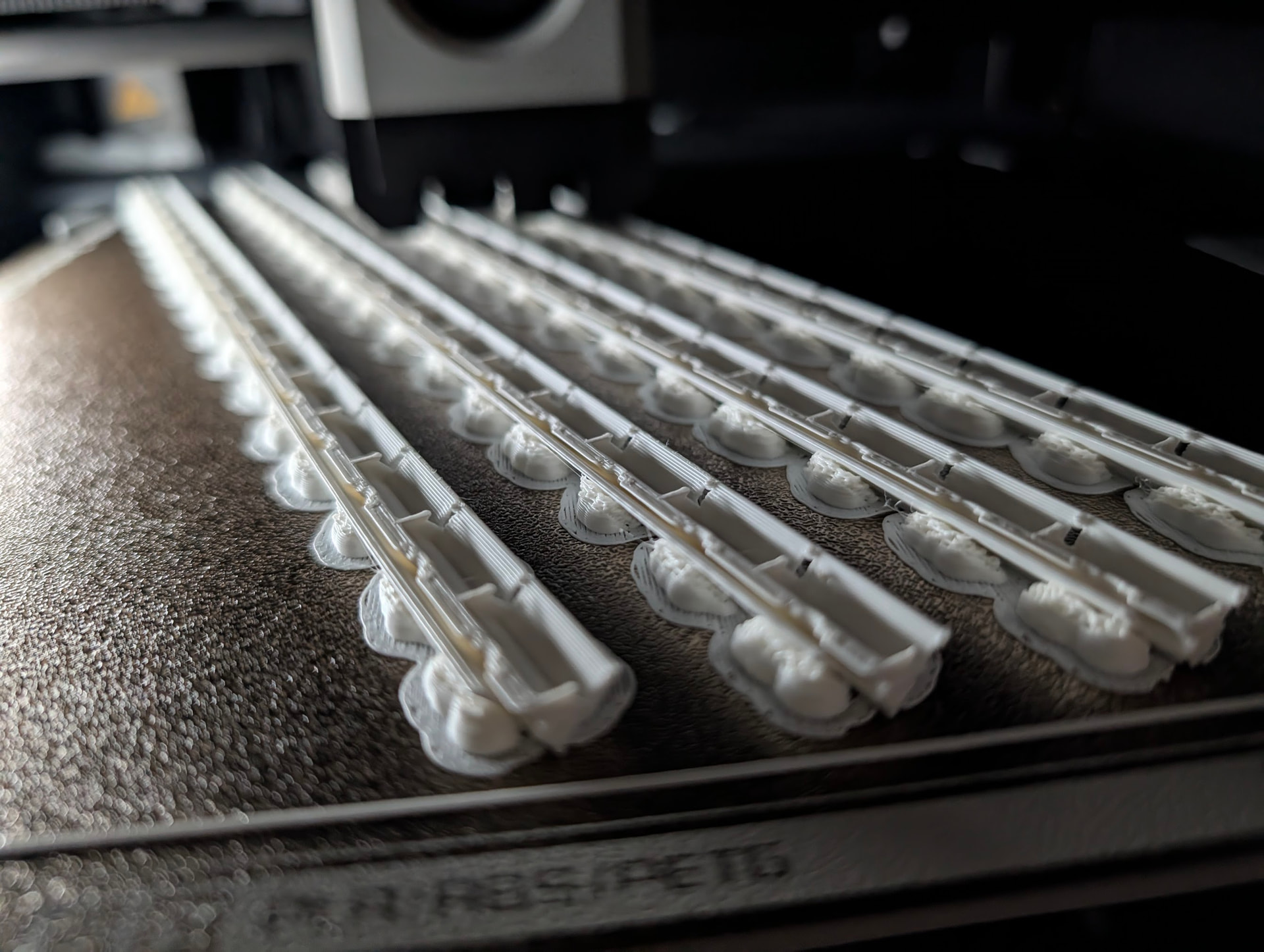
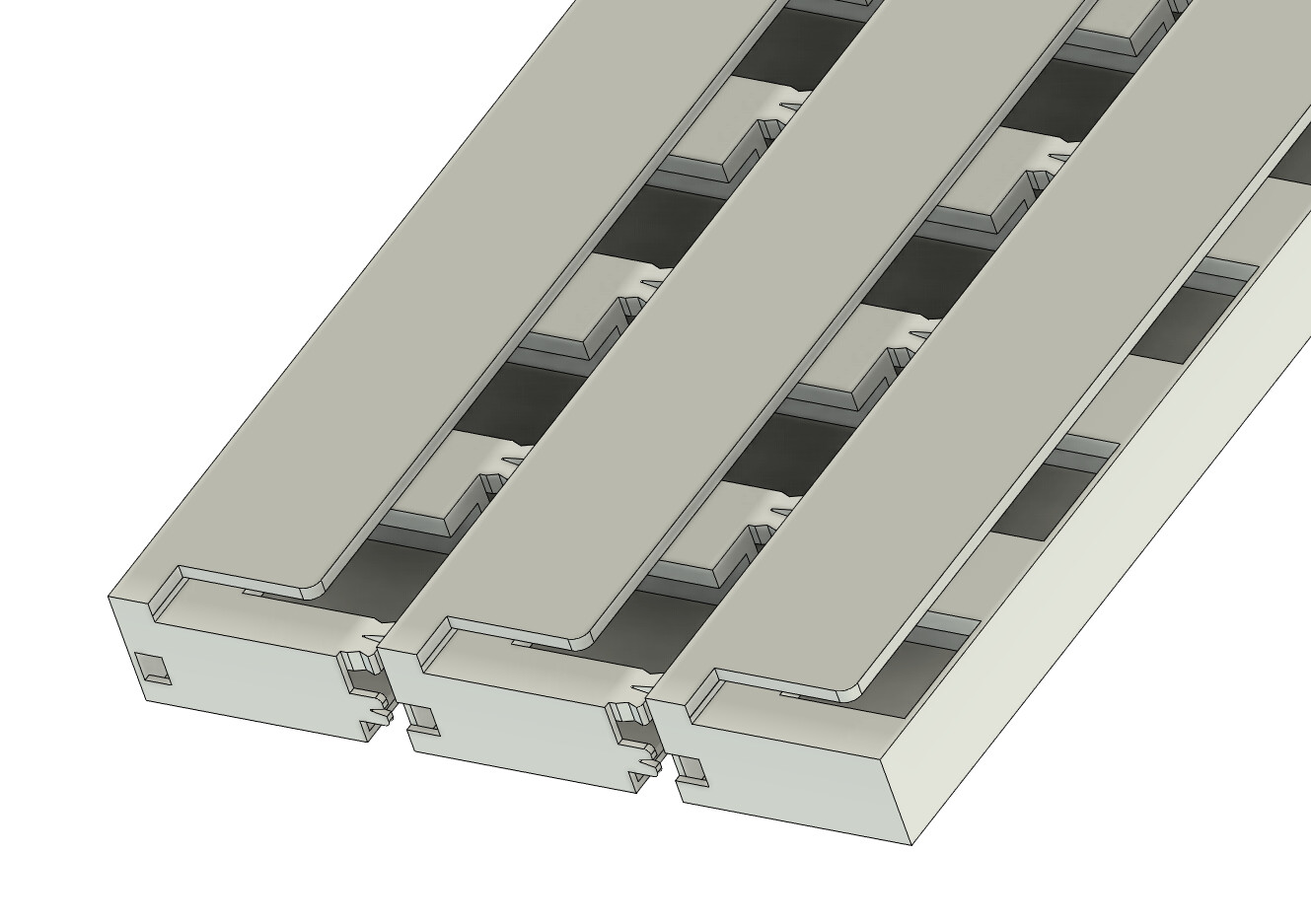
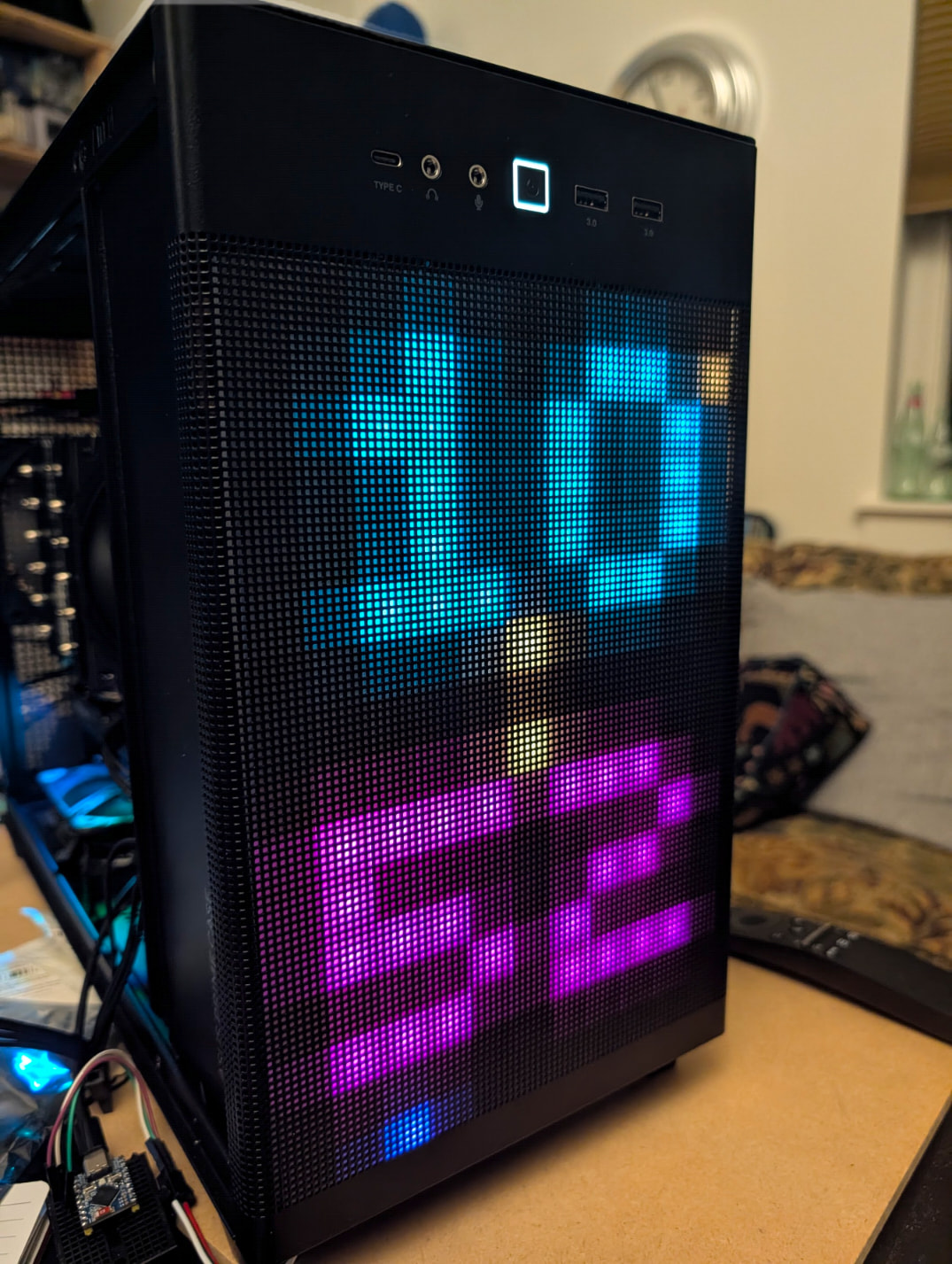
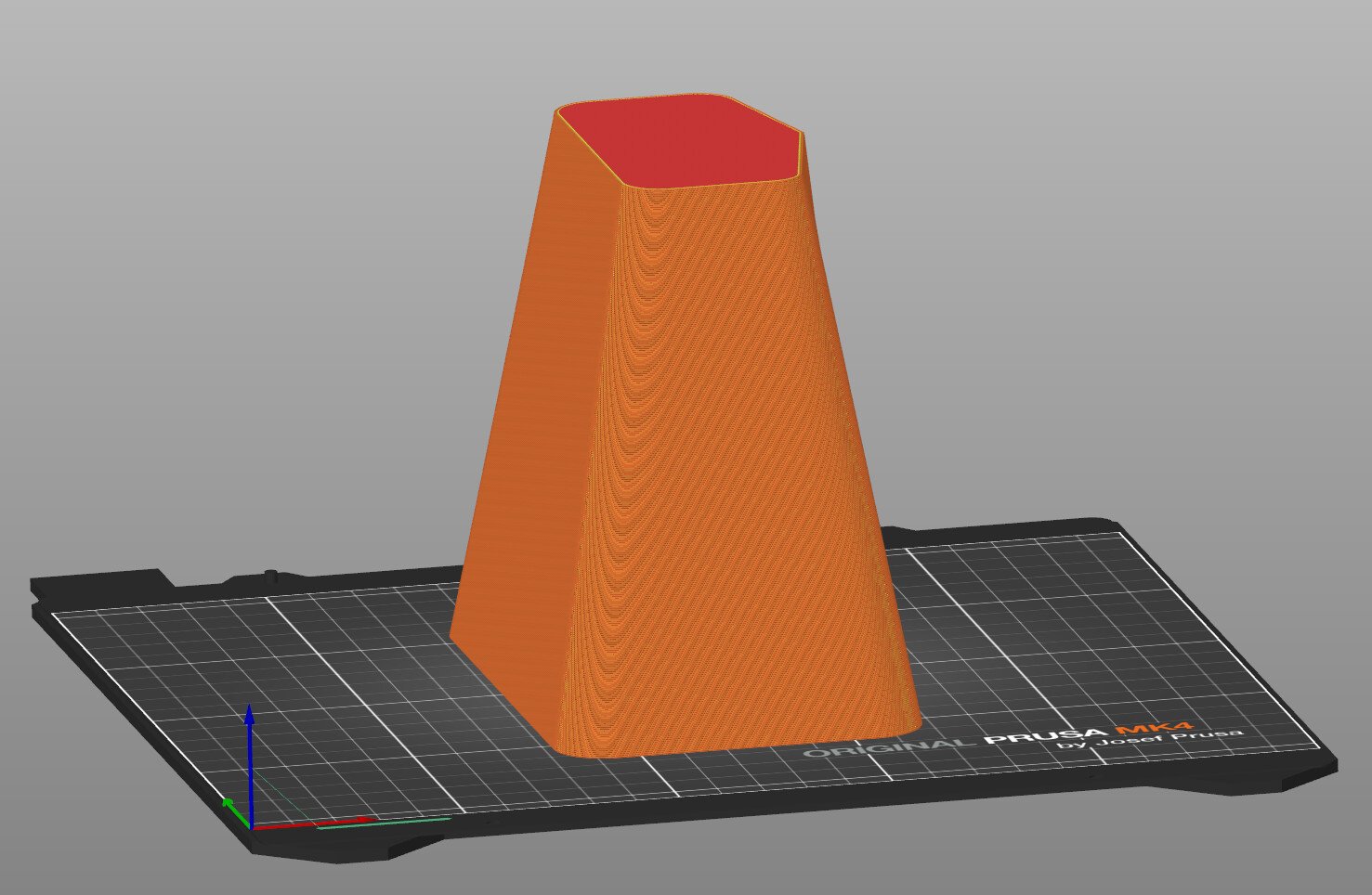
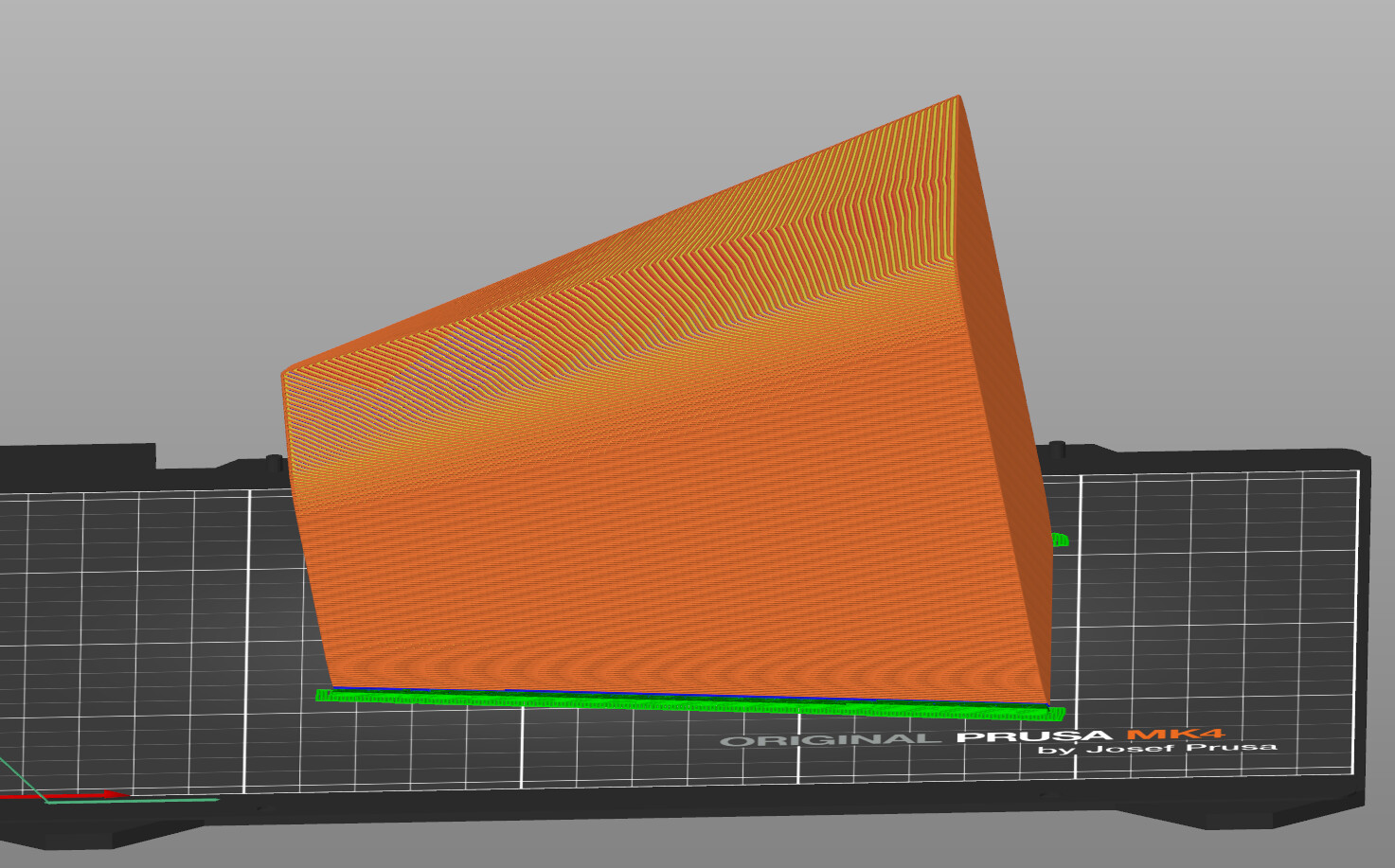
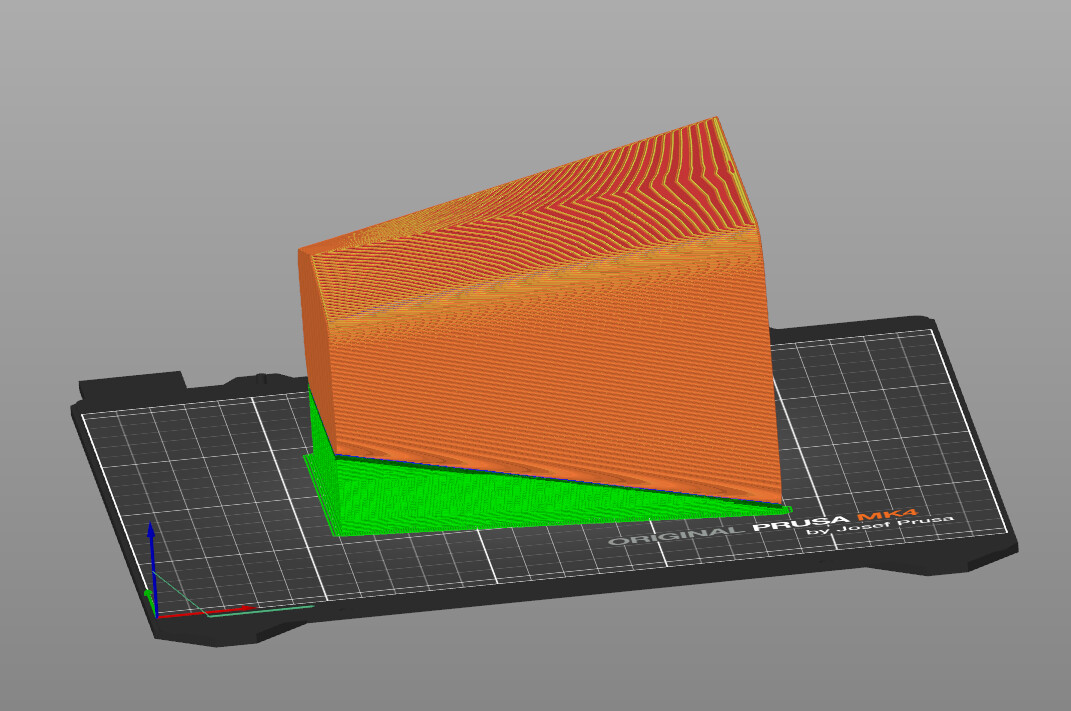
Also, if you aren’t already rotating your 3D printed designs by 45 degrees to avoid internal supports, this is your notice to try it. This snap-together-columns design has an internal floating “shelf” that holds the pixel strips in place, and internal supports would be unreachable. Rotating the whole column by 45 degrees lets me print “floating” internal structures with no supports. The outside tree-style supports snap off cleanly.
I formally ask myself this, with three different classes of smart tools available. (CNC, 3d printer, laser cutting)
Or ask: how can this be best oriented to maximize strength and avoid supports if possible?
I look forward to seeing what this is when it is finished.
I started flowcharting my workflow the other day to better understand it, and you just made me realize that some of the blocks in this already complex flow chart deserve their own flowcharts. I mean, a lot of thought goes into it before I ever get to Fusion or whatever SW will be used; sometimes several SW packages end up getting used.
@timjedwards - I’m confused. Can you explain in easy terms (cause my brain isn’t that smart!) why rotating something 45 degrees would change internal structure when you’re not adjusting the outside structure? Are you just rotating it on the print bed or is it in designing the structure itself?
@dwardio - you’re right. I don’t recall if the “they” was just comments I’ve read, or whether it was from a manufacturer (Bambu, Sunlu, whomever). I’ve found that even within the FD group. I’ve read where you NEED to use oxygen absorbers in EVERYTHING, including vacuum sealed jars, but every time I use them, especially in mylar, everything goes soft and I have to throw it away. One of the “experts” in the group, “FDing for 10+ years”, says that if you don’t use an OA, even though the food may still be dry and the jar has been vacuum sealed, “you lose the nutrition.” That I can’t understand why you would lose nutrition when the jar is vacuum sealed. I quit using OAs, as I almost always use jars, and I know there’s a good vacuum because I have to pry the lids off. And strangely, even the food I’ve put in mylar without an OA has remained nice and crisp. I had done a batch of green beans right after I got my FD, and forgot to put the OAs in. The next batch of green beans I did, I DID put the OAs in, and within 6 months, those were soft and I tossed them, as I opened one bag and it had a bad odor, hence the tossing. So yeah, “They” is something I should avoid listening to. Except for the people in here, of course! I totally trust y’all!
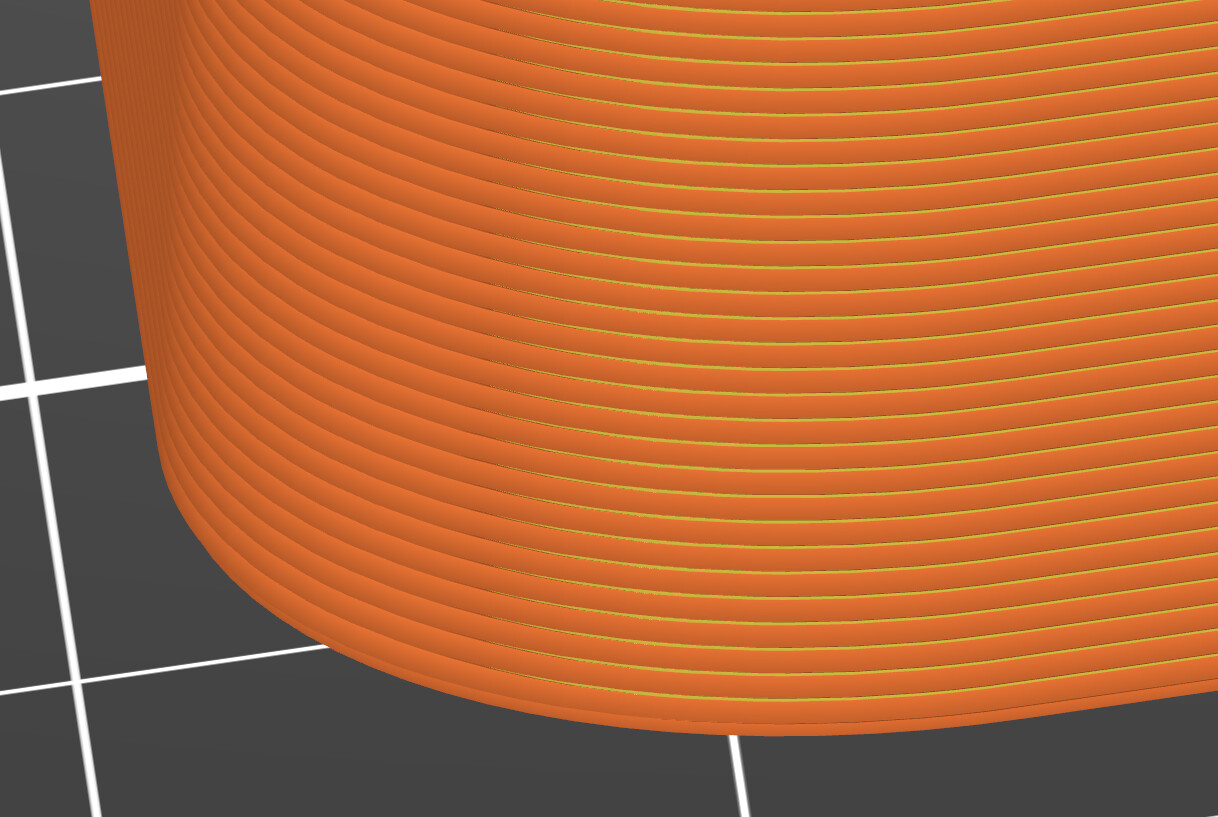
3D printers can do small overhangs (where the hot filament is not supported by anything below) but only a very small distance before things start to sag. So if you print an angled object (e.g. a “V” shaped wall with the point on the print bed), each progressive layer’s overhang is small, supported by the layer beneath.
So when you have hard-to-support structures that are parallel to your print bed, rotating the entire design results in angled walls that can use this principle to print with no temporary support required.
Another benefit of this technique is that it alters the seam lines relative to the design, which can lend strength to delicate structures which might easily snap otherwise.
@ellencadwell You know how wood is much stronger along the grain than across it? Well, FDM 3d prints work the same way. Not super important if the design is decorative, but if you are going for strength, it becomes paramount.
The strength of FDM 3d prints runs along the X and Y axes, with the Z axis being weaker, or much weaker, depending on the design and the filament.
If you are still scratching your head, say so, and I’ll post with illustrations.
A couple of times I’ve tried tree supports and they have been the only print failures I’ve had. I tend to use default settings, so I blame the slicer, but PrusaSlicer should be pretty good at generating supports that don’t snap off mid-print, one would think.
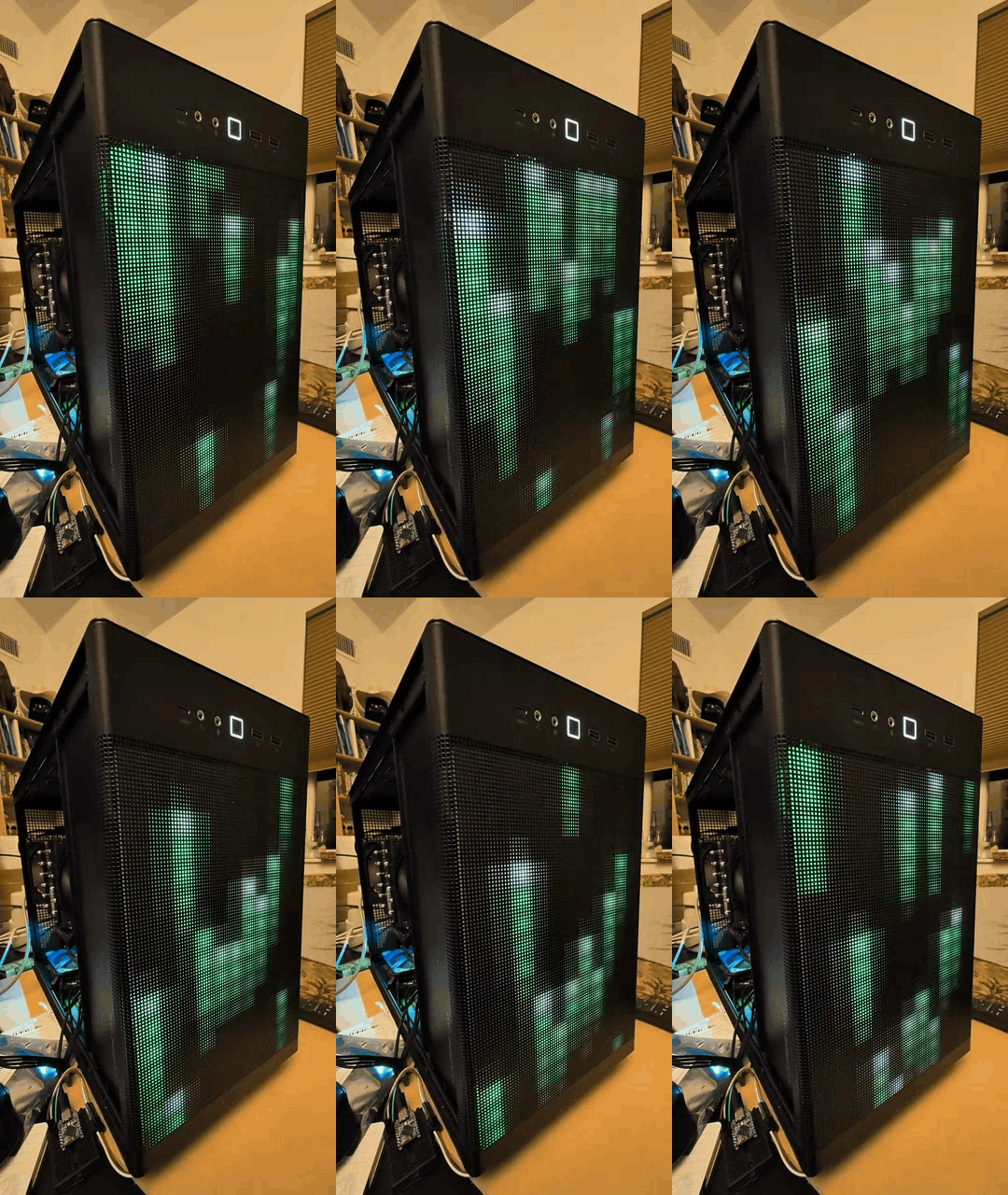
I’m loving this, I’ve been thinking on what to do above my center monitor as my monitors are currently mounted L-R vert, horizontal, vert, making a U shape with free space above the center.
You are about to convince that adressable LEDs are the way to go!
@timjedwards - okay, that makes sense. The LEGO illustration helps!
@markevans36301 - illustrations would help. I’m more of a visual person in understanding. I think I finally have it in my head that X = width (left-right), Y = depth (front-back), and Z = height (top-bottom). Right? Sometimes I get confused on what order dimensions are listed. Are they always X x Y x Z?
On a good note, I did just successfully change the height of a design of seed drawers I found on Makerworld! The drawers and what they sit in are perfect, but sat down just a little too low for my husband to be able to grab the “handle” easily. I just needed to adjust it a little bit, but trying to figure out just how much was a guess. But it worked out fine. Yay!
Body one is sitting in the orientation that’s easiest to print, but let’s say it will be stressed to break along its xy (as it sits, this orientation is the weakest because of the layers).
Okay, that makes sense to me now. Of course, then I’d have to worry about how to design the support to get it to the right height! And wouldn’t it need some type of tree support in the middle of what is actually the bottom to keep it from collapsing? Or am I overthinking it? I have seen designs where Bambu says it’s best to reorient something, but maybe that’s on multi-color designs where it builds the tower next to the design (can’t think off-hand what the tower is called).