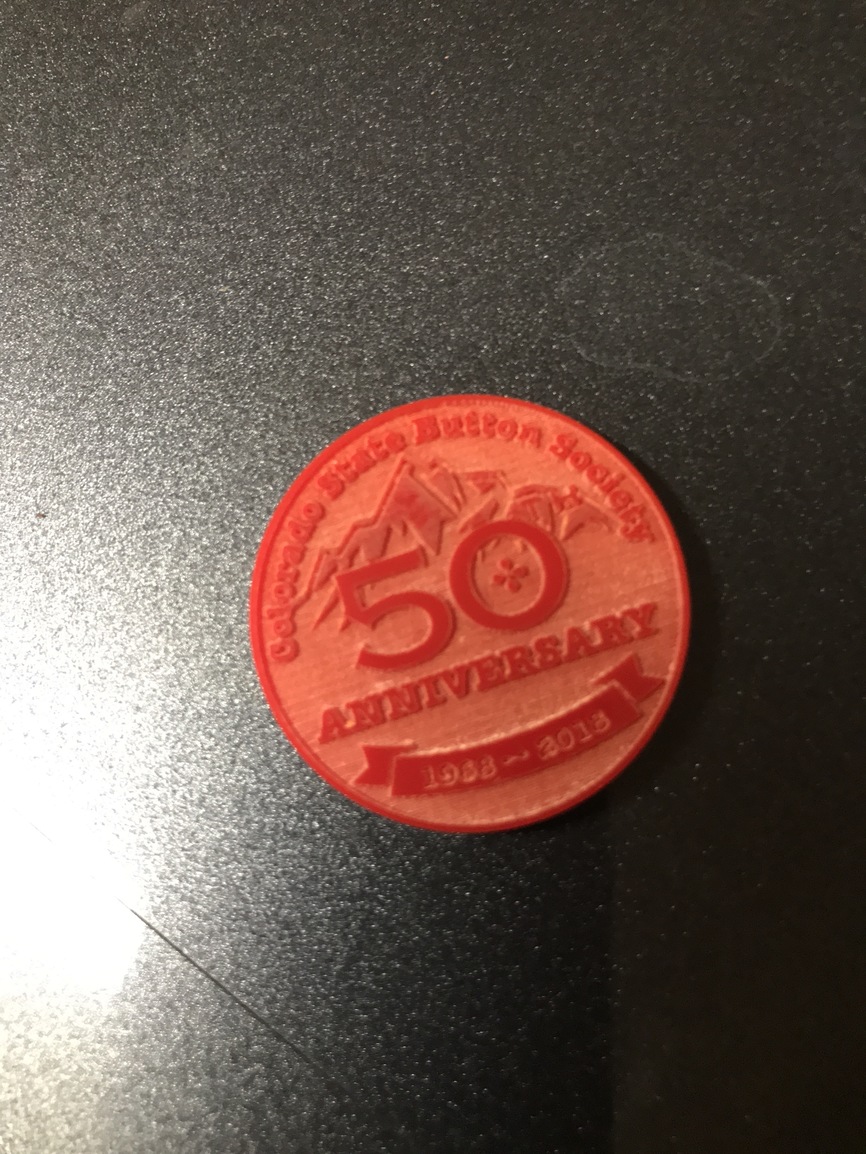
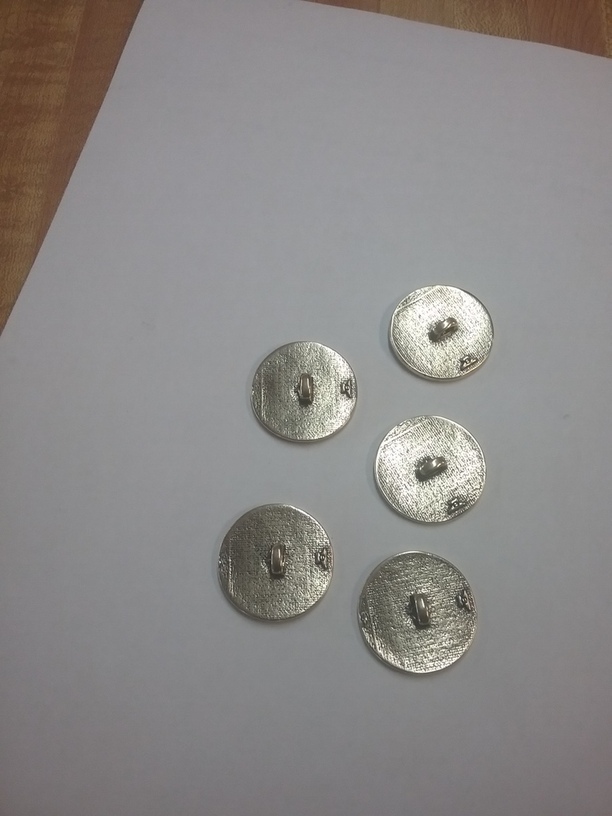
My dad has been a button maker for the past 30 years. Mainly hand-stamped, coin buttons, bone, etc… This year the Colorado Button Society commissioned him to create a button for their 50th anniversary. They had very specific requirements so I collaborated with him to create a button in red acrylic and then he had it cast in bronze. I think it turned out pretty good. The back loop is a separate piece that we glued on.
Very nice! After years of carving wax by hand, the use of a laser with its precision to model inspires me. Would you happen to know the burn-out temperature he used?
The button was probably made legit with the lost wax method, but here’s a good video on how to do a resin/metal powder cold cast. It’s the lazy/poor man’s bronzing method. Looks pretty good when all is said and done, though. And you can use whatever metal powder you want, like finishing something in brushed nickel, for instance. https://www.smooth-on.com/tutorials/metal-cold-casting-smooth-cast-325-resin/
If you cut a material that could stand up to the temps you could make and cut the mold directly and make as many waxes as you wanted from that. I first got involved in cast jewelry with a man who would cast orchids in gold and incorporate the leaves I carved for him out of serpentine.
As with most things any ash would get into the gold and leave pits.
Yes, I vulcanized rubber molds of my original designs, and used a wax injector to reproduce them. I eventually lost interest in production, doing the same thing over and over killed the joy. Custom work gave me much more enjoyment.
I did enjoy the years spent teaching myself the trade though.
In comparison to alloying my own gold, pulling the wire, rolling sheet, mold making, casting, wax carving and cutting my own stones, working with a laser (reproducing designs) is so easy it’s almost unbelievable.
Learning to use a robot with a 40w laser has been wonderful.
I had a job for a few years cutting rubber molds and was the only one I knew of without severely scared hands from all the close work with a scalpel that sometimes slipped. (I used small visegrips)
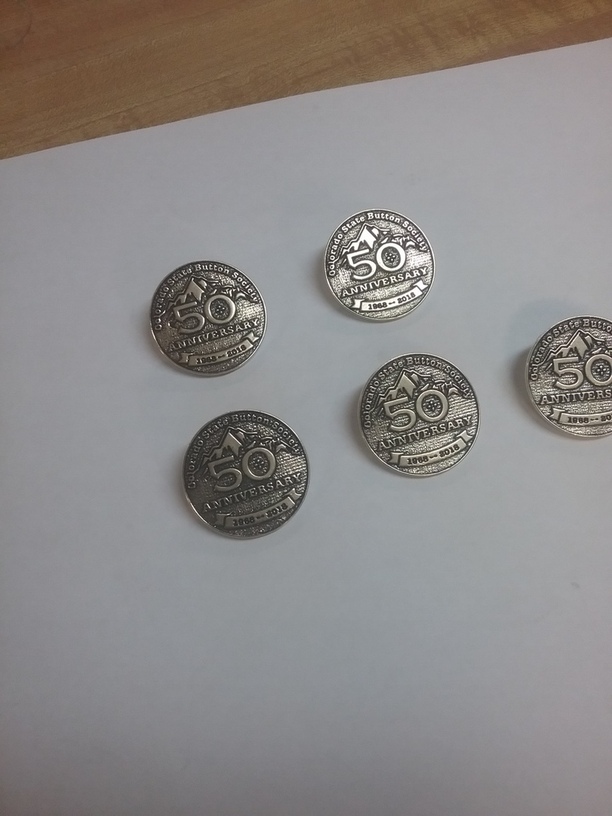
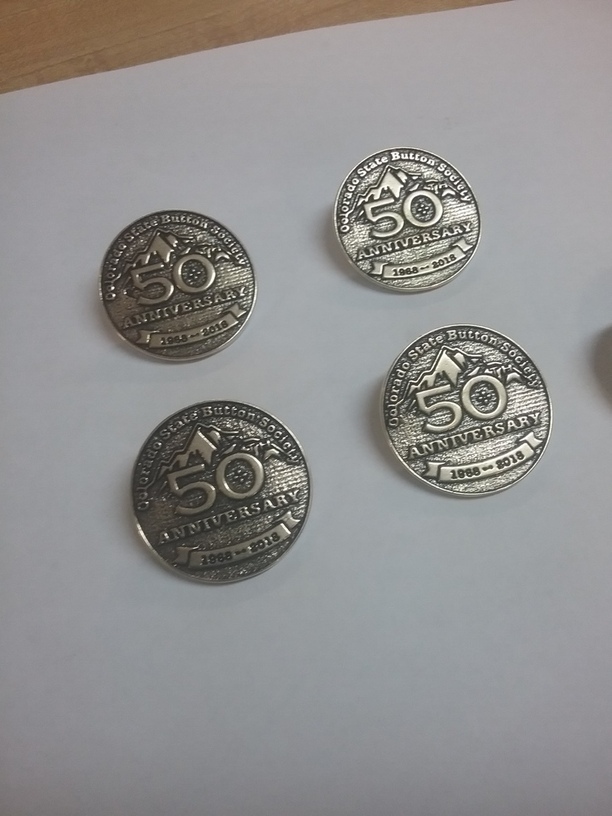

 can’t be used for. Love the buttons, so crisp!