When: Wednesday, June 3rd
Time: 7:30pm EST
Re: Polyhedral Design w/ Mike
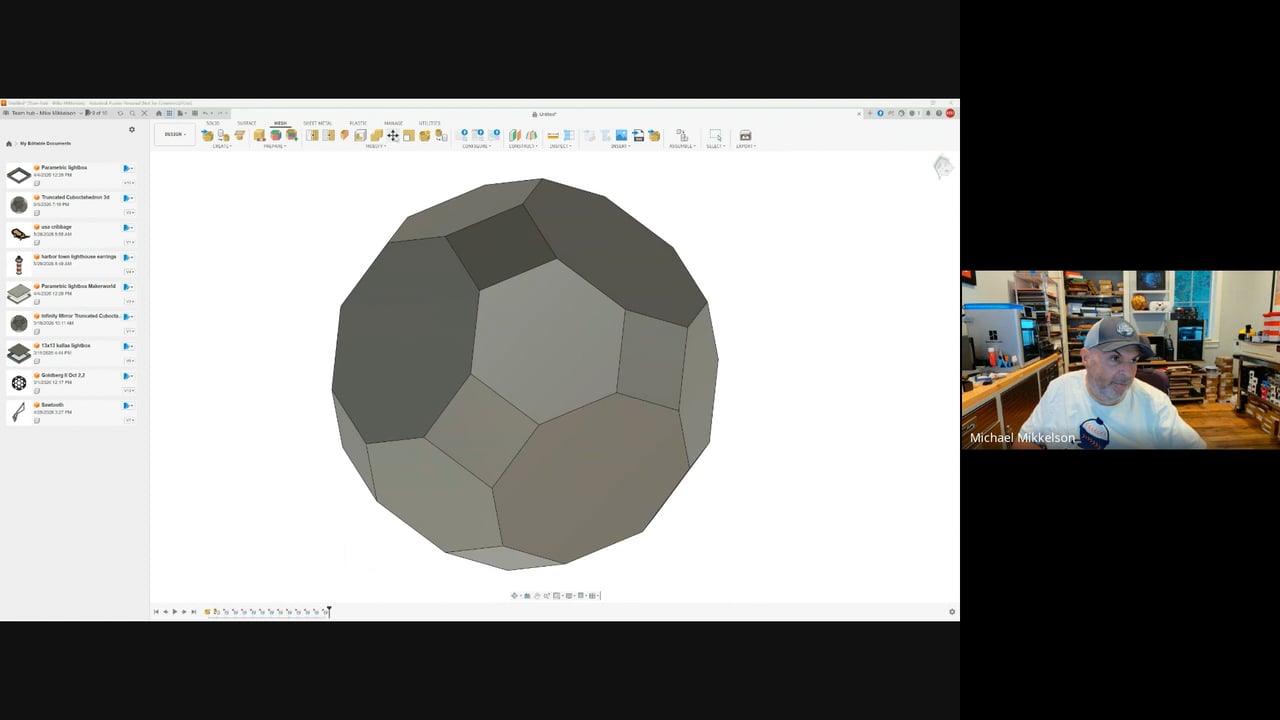
Thank to all that participated. Here are the promised files, including STEP files for both the session and the completed shape, printable STL files, original shape STL, and the saved Stella4D file. Truncated Cuboctahedron Files.zip (296.3 KB)
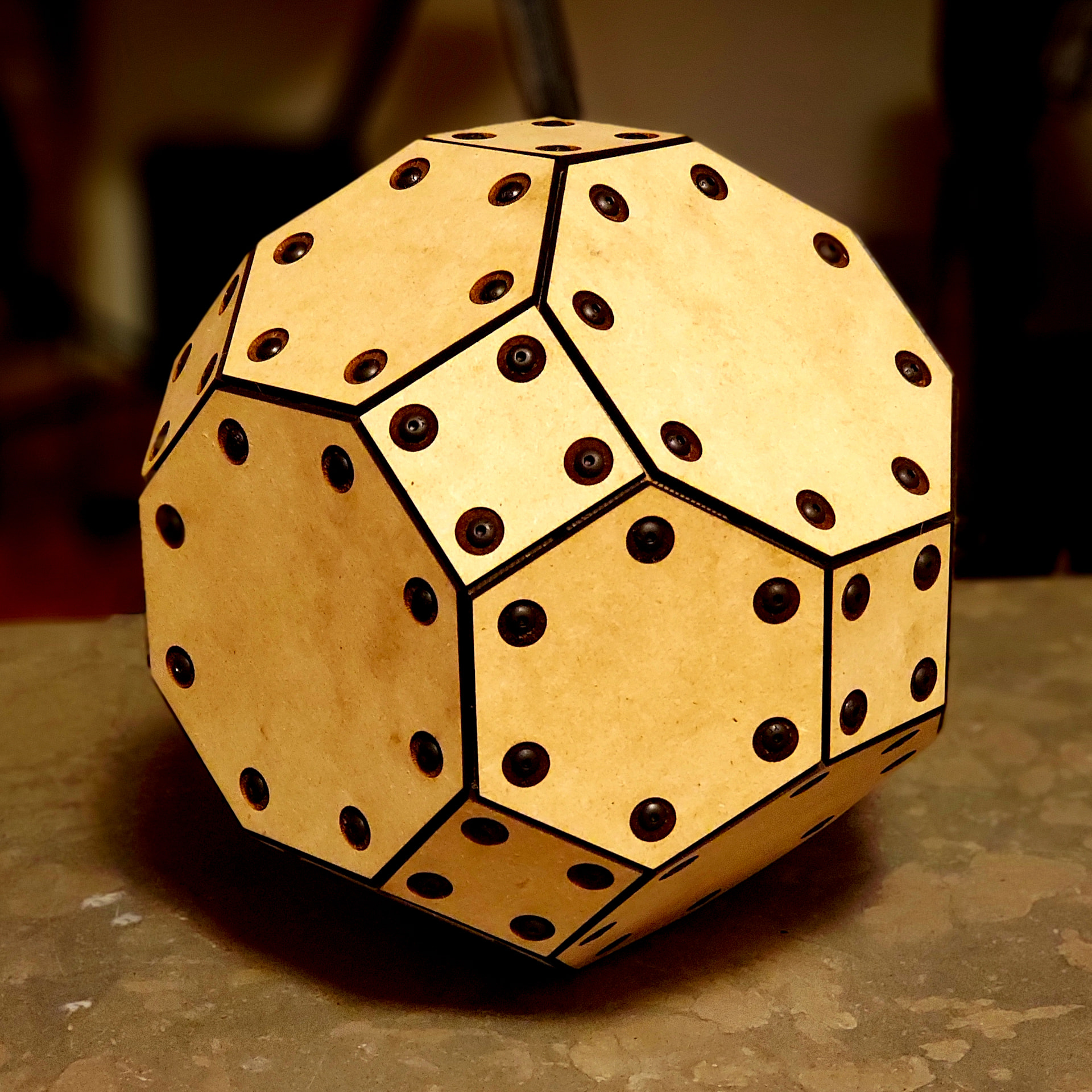
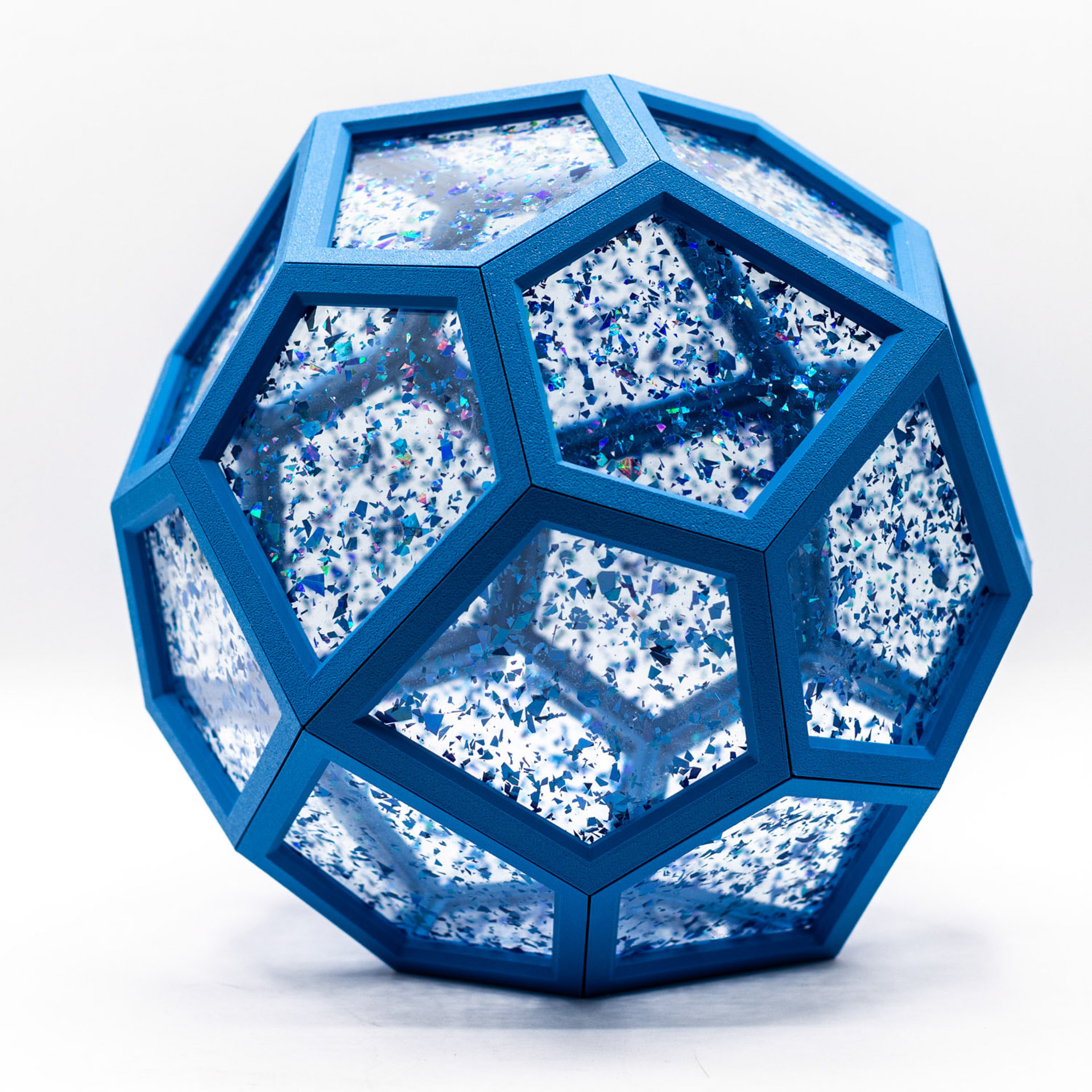
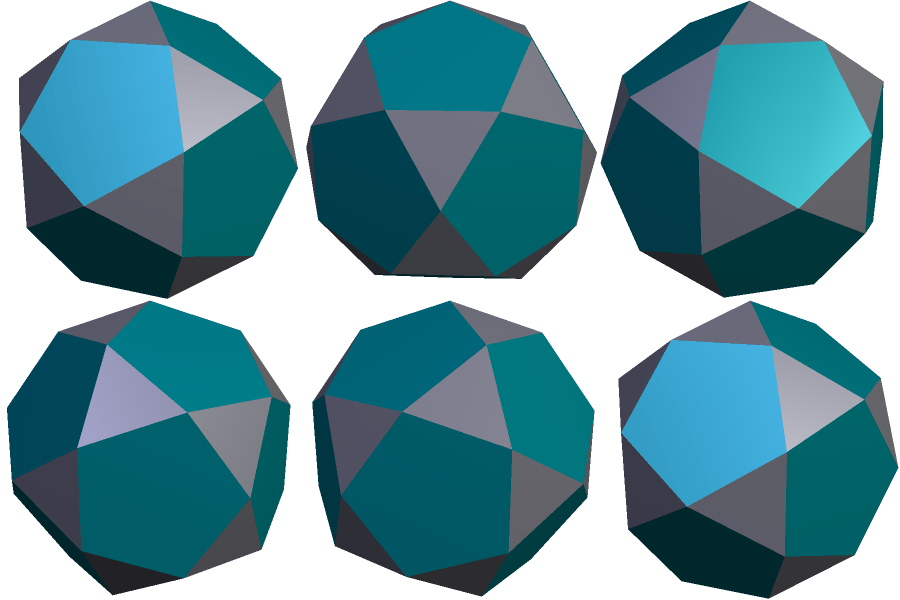
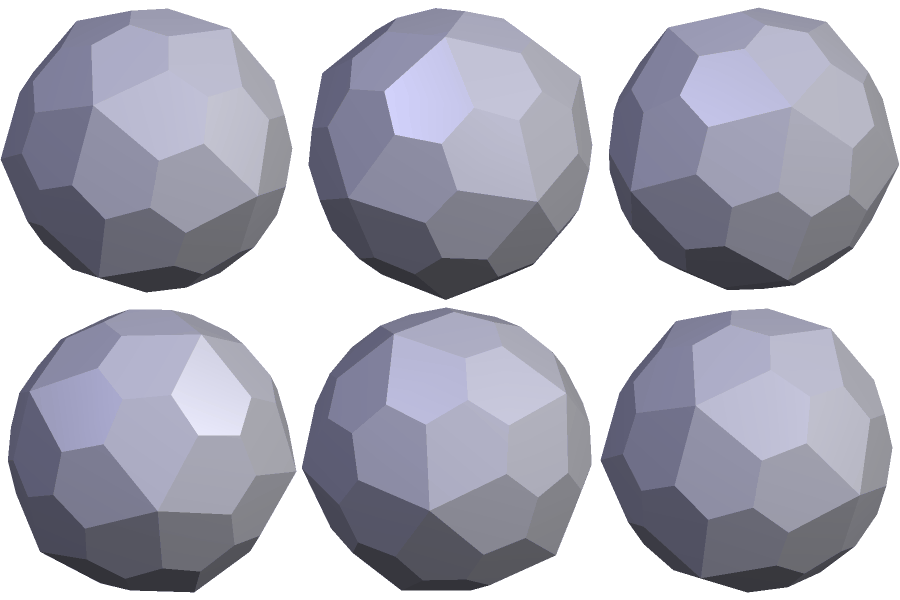
The option on the left uses 3D printed connectors that are hidden inside and use screws to connect faces. The second one uses 3D printed borders that attach to each other without screws. I’m using these shapes as an example, and the one we do will be different. Which method would the group like to learn?
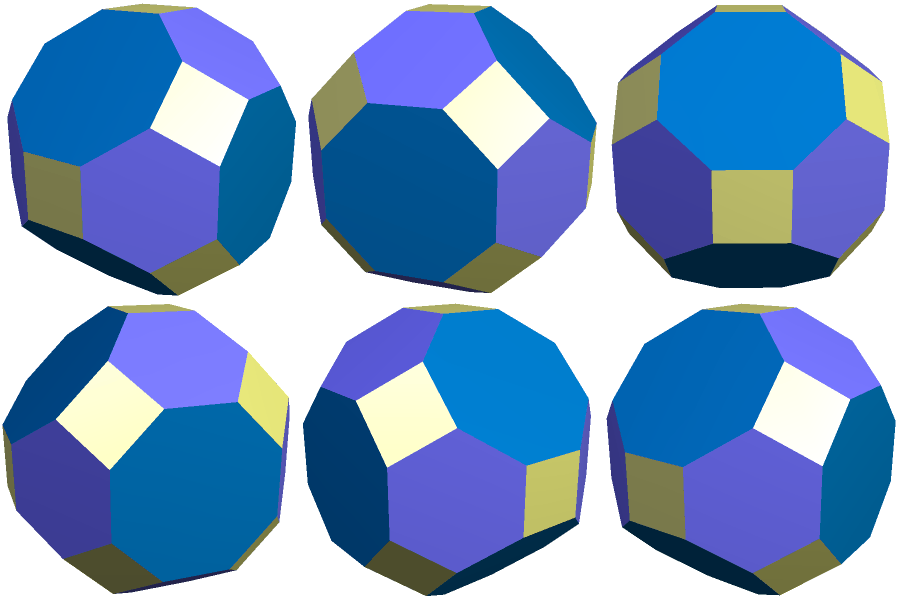
The Truncated Cuboctahedron requires modeling 3 shapes, the Icosidodecahedron 2, and the Pentagonal Hexecontahedron has 1. However, the Pentagonal Hexecontahedron requires printing 60 face connectors and is probably the trickiest to assemble.
Based on the scheduled time, it looks as though I will probably not be able to attend as I will still be driving home from work (7:30pm EST = 4:30pm Arizona) and I will not get home until ~6pm. Will this event be recorded (i.e. audio/video) and available to play at a later time?
Sorry for being late! I’ve been so busy, I didn’t even realize we’ve reached June. And I had to think about the time zone. Great information though, thanks again!
You really made a few lights come on for me. The biggest one is when in doubt look the construction tab and there is probably a unique way do a construction plane that I hadn’t thought of.
I’ve posted the video from last night along with the files at the top of this thread. Thanks to all who joined in on the session. Please post any questions here if you have any!
What is the difference between Platonic and Archimedean? Is it just that Platonic Polyhedra have congruent sides, and Archimedean have some sides of different shapes?
Platonic and Archimedean solids are highly symmetrical, 3D convex polyhedra. Platonic solids are uniform and made from a single type of regular polygon, while Archimedean solids are made from two or more types of regular polygons, maintaining identical vertex configurations throughout. [1, 2]
Platonic Solids
Named after the ancient Greek philosopher Plato, there are exactly 5 Platonic solids. They are defined by three strict rules: [1, 2]
All faces are congruent (identical in shape and size).
All faces are regular polygons (all sides and angles are equal).
The exact same number of faces meet at every vertex. [1, 2]
Named after the ancient mathematician Archimedes, there are exactly 13 Archimedean solids. They drop the strict single-polygon requirement of Platonic solids, allowing combinations of two or more regular polygons, but still follow these rigid rules: [1, 2, 3]
All faces are regular polygons.
The arrangement of polygons is identical around every vertex. [1, 2]
Many of them can be formed by “truncating” (slicing off the corners) of Platonic solids. The 13 Archimedean solids are: [1, 2]
So you know how sometimes things go a lot farther than you ever thought they would? I’m in a Fusion class (Zoom) on Tuesdays, and the teacher is a pretty big soccer fan, so his weekly design challenge a few weeks ago was to design a soccer ball.
Well, of course, I shared the video. The teacher was enthralled, took several of your workflows, and even reworked some of them. So now at least 40 additional people have benefited from it.