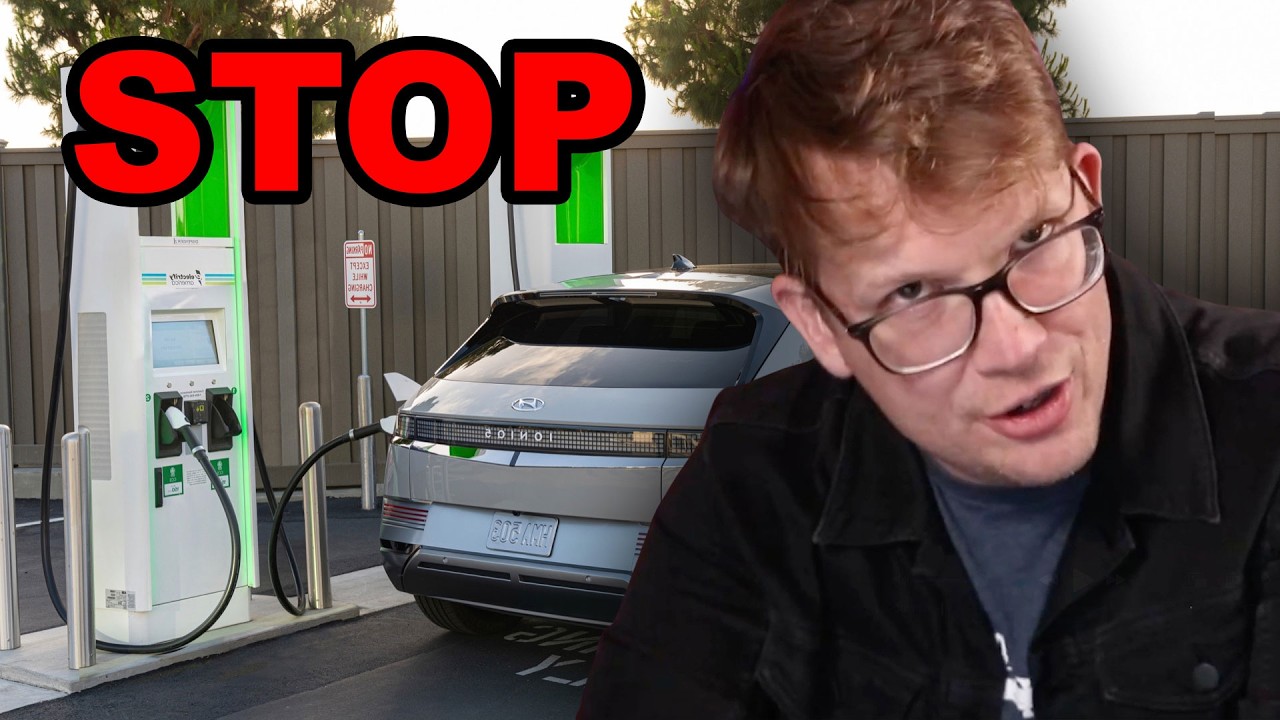
I didn’t want to pollute Aloha’s thread (on the cover for his car charger outlet) with this, so I figured I’d start a new one. This is, after all, “everything” else.
I love electric, and hybrid. I’ve driven both. I wanted an electric or plug-in hybrid when I bought my last “fun” car in 2018. But my home was built in 1967, and even a small miter saw would trip the only outlet in my garage (car port), and my “real” miter saw wouldn’t even start without throwing the breaker.
I spoke to an electrician and discussed the layout of my home. To cut to the chase, it was going to cost $16,000 at the time to “upgrade” my home and electrical service to support the ability to charge an electric car. And he let me into a secret - it would not be sustainable as more people buy these things. The electricity distribution network was simply not built for the levels of power required if even 1/4 of the customers charged up vehicles at night. You don’t fix it by running a new line down the street - the whole system, including generation, needs to be rebuilt.
Solar was completely out of the question as well. Atlanta is a forest, my home 25 miles outside the city center saw something like 20% of daylight hours in direct sun during summer, the surface area available was far from sufficient even in full-sun. In winter, virtually no sun at all.
I will likely be forced to get a new vehicle (the fun car I had for 5 years was sold in 2023, and I only have my 11-yr-old Sorento now) sometime soon, and a “regular” hybrid without any plug-in capability is probably the direction I’ll go.
I love my Kia Niro Hybrid for many of the same reasons. I get the advantages of electric, but use gas to keep it going.
My folks are 100% electric with no home charger, but they’re also walking distance to a public charger.
They have to plan their trips like their using public transport. Adding buffer time in case the charger is full, checking schedules if reservations are required, etc. It works for them because they live on a small island and 90% of their trips are under 2 miles.
As far as redesigning our entire electric grid, yes, but not just because of cars. Our grid needs to be updated to include home solar & wind, and bi-directional flow, and to get rid of the idea that “peak” is 9-5, and so many other issues. Unfortunately since 95% of grids are owned/operated by for-profit companies, that’s not going to happen until something catastrophic occurs (see Paradise, CA) and even then they’ll fight tooth and nail to do the absolute minimum.
Have you seen the articles about the new style of hybrid that (I’m not an engineer) uses the gasoline backup to charge the electric rather than drive getting them ~1000 miles per tank?
been pretty happy with the RAV4 prime for the past couple of years. you can charge it overnight on 110, takes about 11-12 hours on 110 and maybe 2ish hours on a regular charger, and i’ve been getting about 48 miles per charge. so if you get a full charge, most people don’t drive more than 50 miles on a regular day. with a full charge and a full tank, well over 500 miles of range. 0-60 in about 5-6 seconds, so it’s got a little giddyup. and toyota is still king at hybrids.
Electricity production needs to grow by only 1% annually to support electric vehicle adoption through 2050—well below the 3.2% average annual growth seen in the U.S. over the past 70 years. (Source: US News)
Complying with the Environmental Protection Agency’s (EPA) latest GHG standards for light duty vehicles will create only a 6% total increase in electricity demand by the end of 2032. (Source: Consumer Reports)
Solar capacity is set to grow by 237 GW and wind by 78 GW by 2030, enough to meet rising U.S. power demand from data centers and electric vehicles. (Source: Reuters)
Electric vehicles boost electricity sales and increase utility earnings by 2.2% to 4.7% over 20 years. (Source: This unlocks sustainable revenue for utilities to upgrade grid infrastructure, support EV integration, and increase the reliability of energy distribution. (Source: Berkeley Lab)
A 2023 study found that managed charging generated enough utility revenue—$1.1 billion for Con Edison and $141 million for National Grid —enough to offset grid upgrade expenses while maintaining neutral to positive impacts on consumer electricity rates. (Source: Environmental Defense Fund)
I suggest “will EVs overload the grid” as a search term. I made that search in incognito browsers on multiple search engines to make sure I wasn’t in a bubble. Every article and paper answers that question with “no”, none answer it with “yes”. I think your electrician friend’s claims are without basis.
FWIW, IMNSVHO, there are probably areas that it could be an issue eventually. but in the long run, the only way to make it work is to push the grid so the grid gets updated. the reality is it isn’t going to get upgraded until the demand is there. and, depending where you are, the real strain on the grid is more likely data centers than electric vehicles. just read an article about expecting energy prices to rise pretty significantly on the east coast after the last round of energy auctions set the prices much higher, and the blame for those rising prices wasn’t electric vehicles but the additional strain of hte data centers. especially in my area (northern virginia), where we have SOOO many new data centers because we’re the internet hub of the east coast.
Unless you need to drive long distances daily you likely don’t need an upgrade. Most people can get away with charging on 110V overnight. Especially if it’s a plug-in hybrid … those don’t usually have big enough batteries to justify anything beyond 110V charging (and for long trips you can just buy gasoline).
Obviously it’s different if you need to drive 70 miles per day, but most of us don’t.
I’ve found the Technology Connections Youtube channel very useful for learning about electric cars (as well as things like heat pumps).
I read these two articles on the state of solar lately and they were actually some of the only optimistic news I’ve heard about energy and environmental policy and quite some time. I found them informative and super interesting.
The speed with which and the scale at which we are installing solar on a global level is astonishing. We might dig ourselves out of this carbon hole yet.
i don’t think i’d spend a couple thousand to have one installed (just not enough savings to justify), but if you do have one, it’s nice to charge quickly.
so, for example, i wouldn’t run a 220 line somewhere and install a charger. but if i had a 220 in my garage that was available, i’d buy a charger and install it myself if you could just plug it into the 220. that’s more like $400-500 and you might actually get ROI and also have the convenience.
i charge on a 220 in my office (when it’s available) because it’s free charging. we just have to fight for one of the two spots. we actually have a teams chat for EV owners and we let each other know when we’re leaving a space so we pass it off to a coworker instead of someone from another company in the building.
To clarify, I meant my own solar generation. I would not be opposed to panels on my roof if I lived where the sun shines year round. Just not common around these parts, as we live in a forest. There are literally hundreds of homes in this shot, all out of view unless I fly directly over them.
I haven’t read the other replies yet, so I’m interested to see what they have to say regarding your electrician’s claimed secret knowledge about the power grid. I was going to supply my own equally uninformed opinion, but instead I’ll just note that I bought my electric car in 2018 and I charge it every day at home. The neighborhood I live in has been taken over by the things, it’s kind of ridiculous. It seems like every third house has one or two, and as far as I can see, the grid hasn’t shut down. It’s hard for me to imagine ever driving another non-EV, so I hope the electricity continues to flow.
Agree with your side eye at “the grid cannont handle it”. It can.
Typical level 2 charger is pulling about 30 amps, which works out to about 7000 watts on high voltage supply. This gives about 35 miles of range per hr for a typical ev.
A typical electrical cloths dryer pulls ~5000 watts as does a typical home central ac compressor. The grid seems capable of running plenty of such except in really hot weather.
The home I had was built in '67, and would trip breakers if I had two floor-standing oil-filled heaters plugged in on the same circuit. As I stated, the outlet in the garage could barely operate a consumer miter saw, and not a chance with the pro model I also had. I had two air compressors as well - neither would work in the garage. The transformer on the pole at the street needed to be upgraded to a higher level of service, then the wiring replaced/upgraded into the home, and also the panel as it wasn’t built for modern loads. Running wire to the garage was next to impossible given the silly layout of the home.
An electric dryer was out of the question, same with the stove - they were both gas. So too was the water heater. I couldn’t run the microwave if the kettle was on, and so on.
All good lessons for the future, but I never want to own a home with a yard again, which means I’ll likely never be in a position to charge an EV at home either.
my house is older than that ('51), but my breaker box is not 74 years old (although it’s probably 40+). but that’s always an issue in older homes. if you breaker box doesn’t have a high amperage enough circuits for what is plugged into each one, they’re going to trip all the time. when we replaced our stove, we had a new circuit run for it to go 220. and i have a really nice UPS that i’d love to plug my GF into, but i found out i need a 30 amp circuit up there and i’m unwilling to pay an electrician to run one that big up there (that room/outlet is as far as is physically possible from the circuit box).
and if the former owners are as whack as our former owners were, you often have weird things all connected to the same circuit. when we moved in, i attached lamps to every outlet and had my wife turn each one off to see what lamps went out. i have one circuit that handles the downstairs hallway, downstairs bathroom (off the same hallway), one wall in the living room, and one wall upstairs in the finished attic. at least three of the circuits are completely random like that. wired by morons and i presume it wasn’t inspected.
Somehow nobody EVER says “gosh, our electrical grid can’t handle this new business! We’d better deny their operating permit. Better safe than sorry!”
…no, no, of course not. They only say that when it’s an individual homeowner trying to reduce the money they pay to various petrochemical monopolies.
My 1959 house had 100amp electrical service from the worst utility in the country. It now has 200amp service, despite their best attempts to stop me (no, really). Once I upgraded, bang, installed solar. My power bill is now $11 a month, and that’s only due to interconnect fees/taxes, and when they do their annual “true-up” I generally get three months of free power, which means that my annual electrical expense is basically taxes and interconnect fees. With a tiny 9-panel system, no less.
…point being, if you need to upgrade your service level, do so. It’s not just EVs that benefit, it’s pretty much everything you have in your house. If I charged my upcoming EV at home, I presently estimate it would cost me very nearly nothing beyond denting my “free electricity” months.
I bought a ‘24 Kia Sportage Hybrid in March last year. Self-charges battery while driving and braking. Quoted 38 mpg city / highway. It all depends on acceleration, etc. Usually nothing lower than 35.5 mpg, but have often gotten 38 or slightly over. Higher than 65 mph … you lose a bit.
We used to have a Ford Escape like that, self-charging when driving. I have always regretted trading it in for something different. We drove it across country several times and yes, over 65 mph we’d lose a little. Ours wouldn’t use gas until you hit 40mph, which was most of our driving at the time. Even now, when we love taking our long, long drives (can be anywhere 8-12 hours just driving through the hills), we’re usually under 40mph. Yep, really miss that car. However, we still get the “We’re trying to contact you about your extended warranty…” and haven’t had that car for over 12 years!