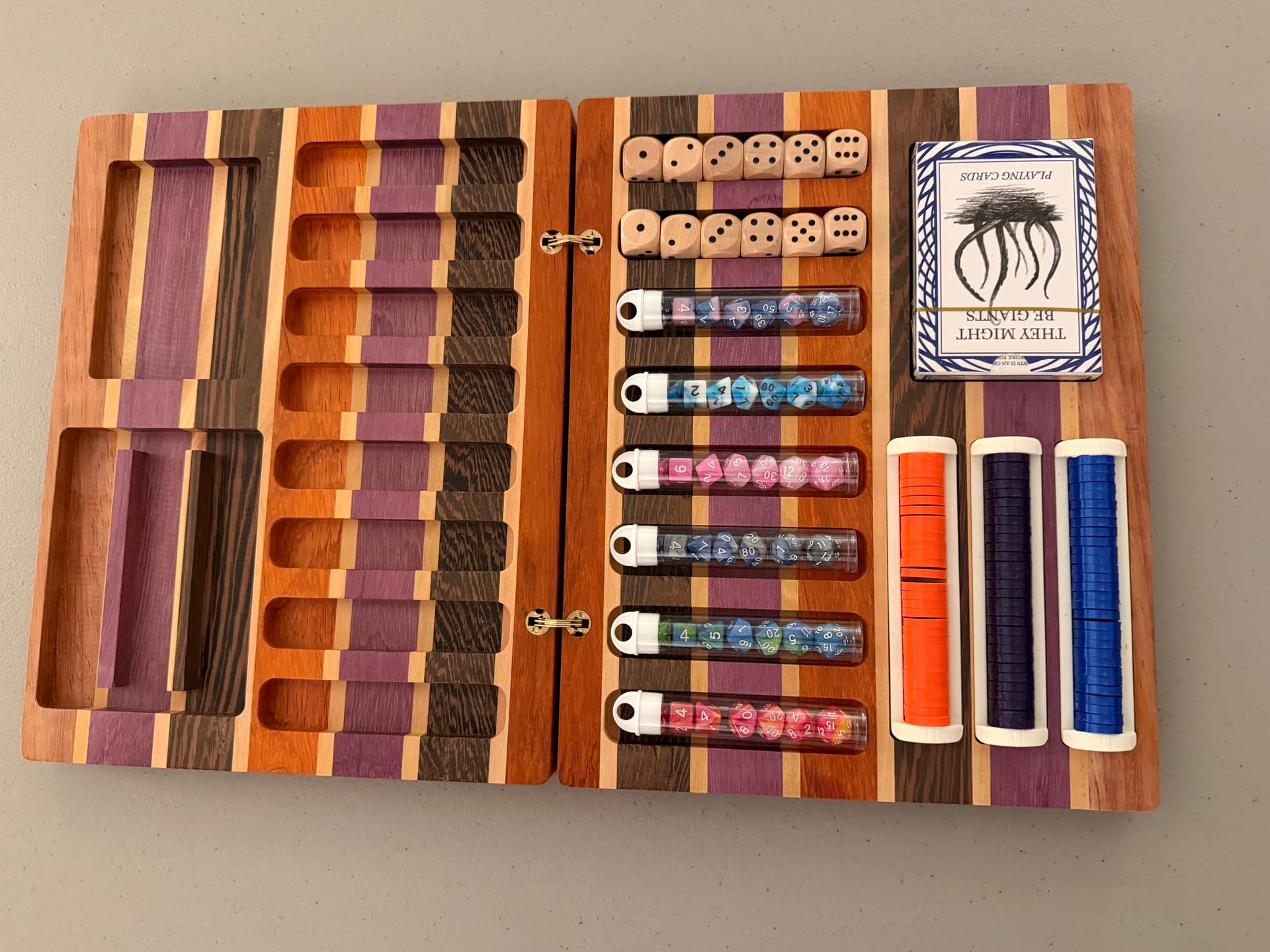
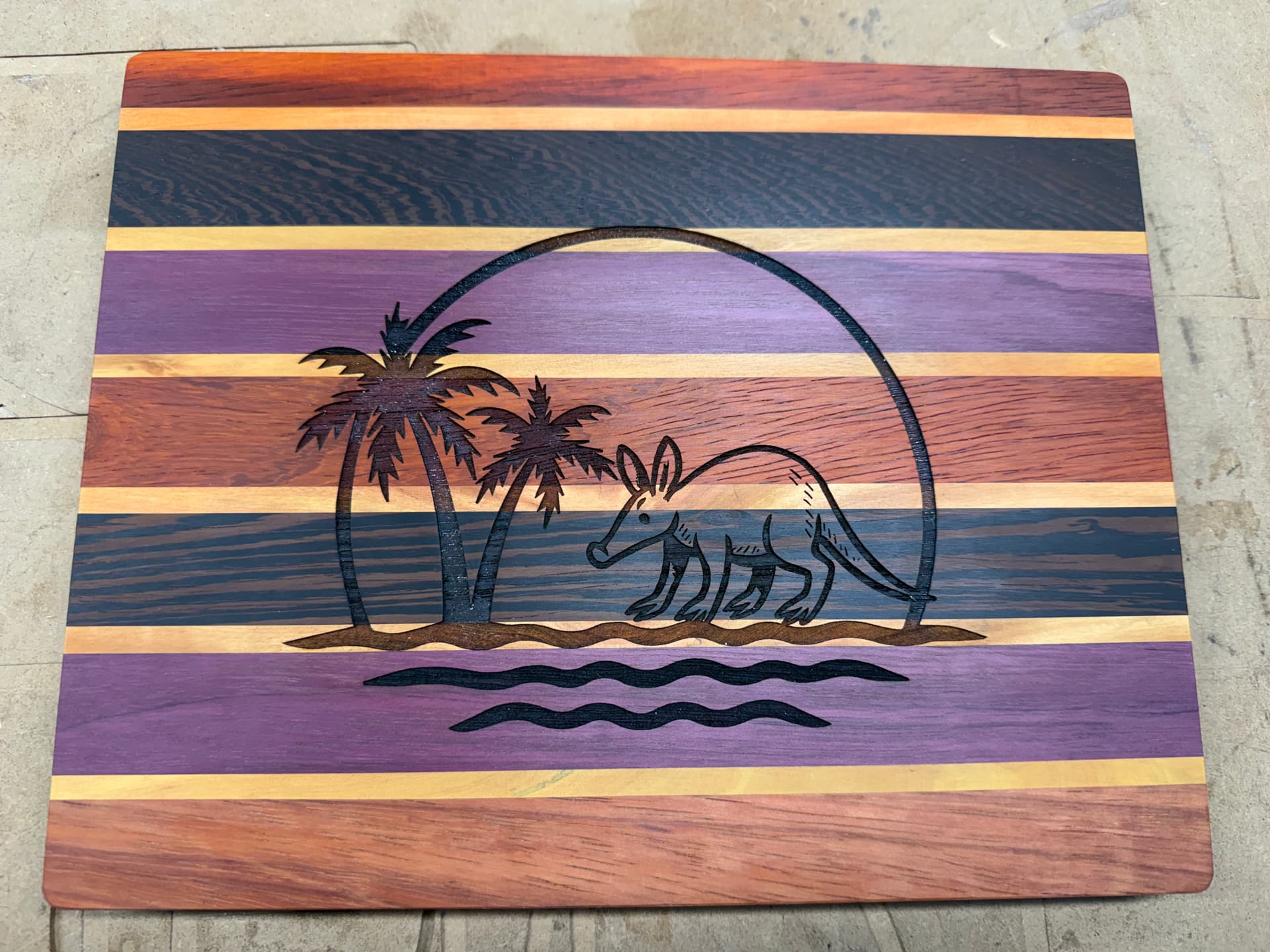
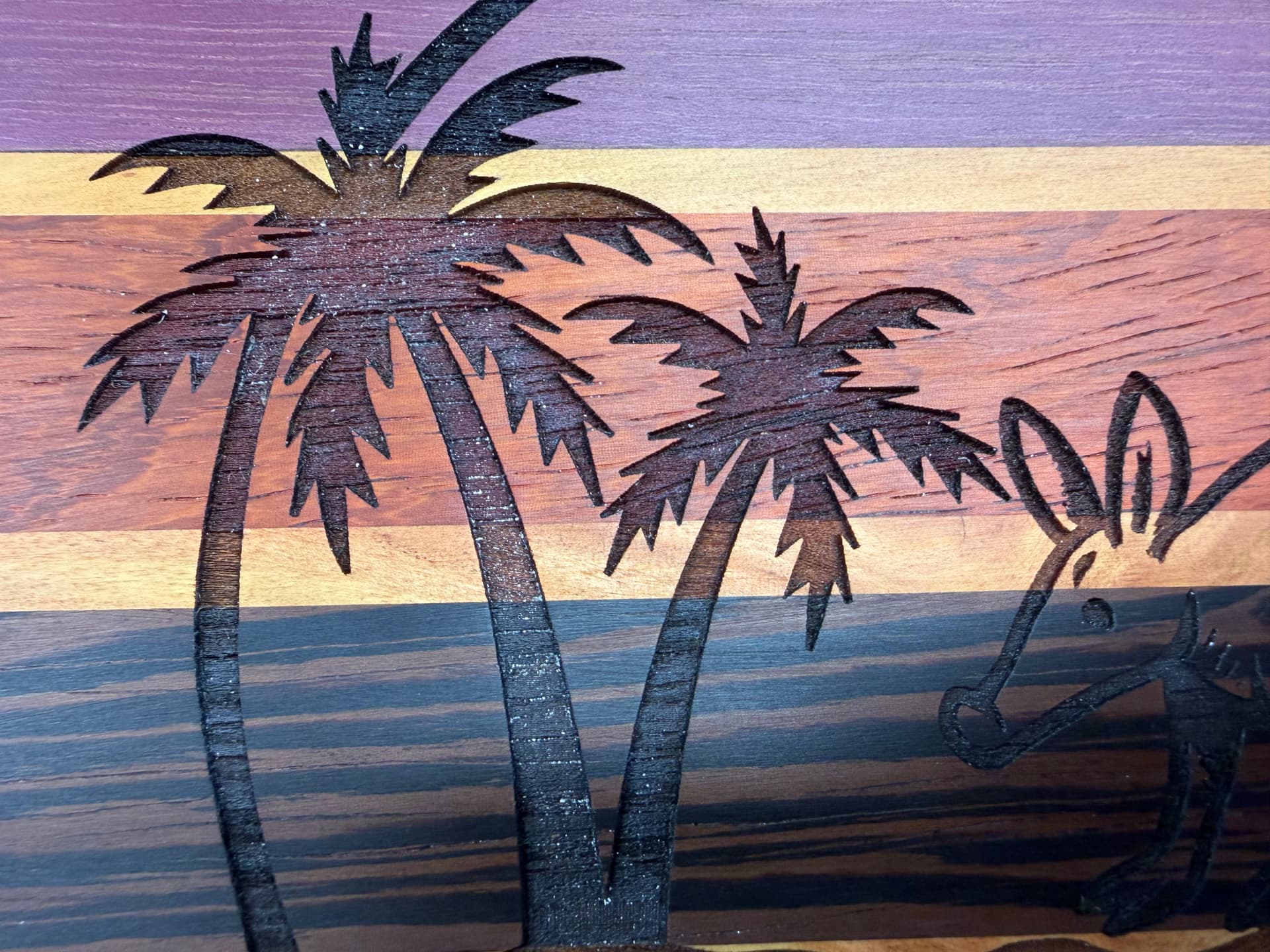
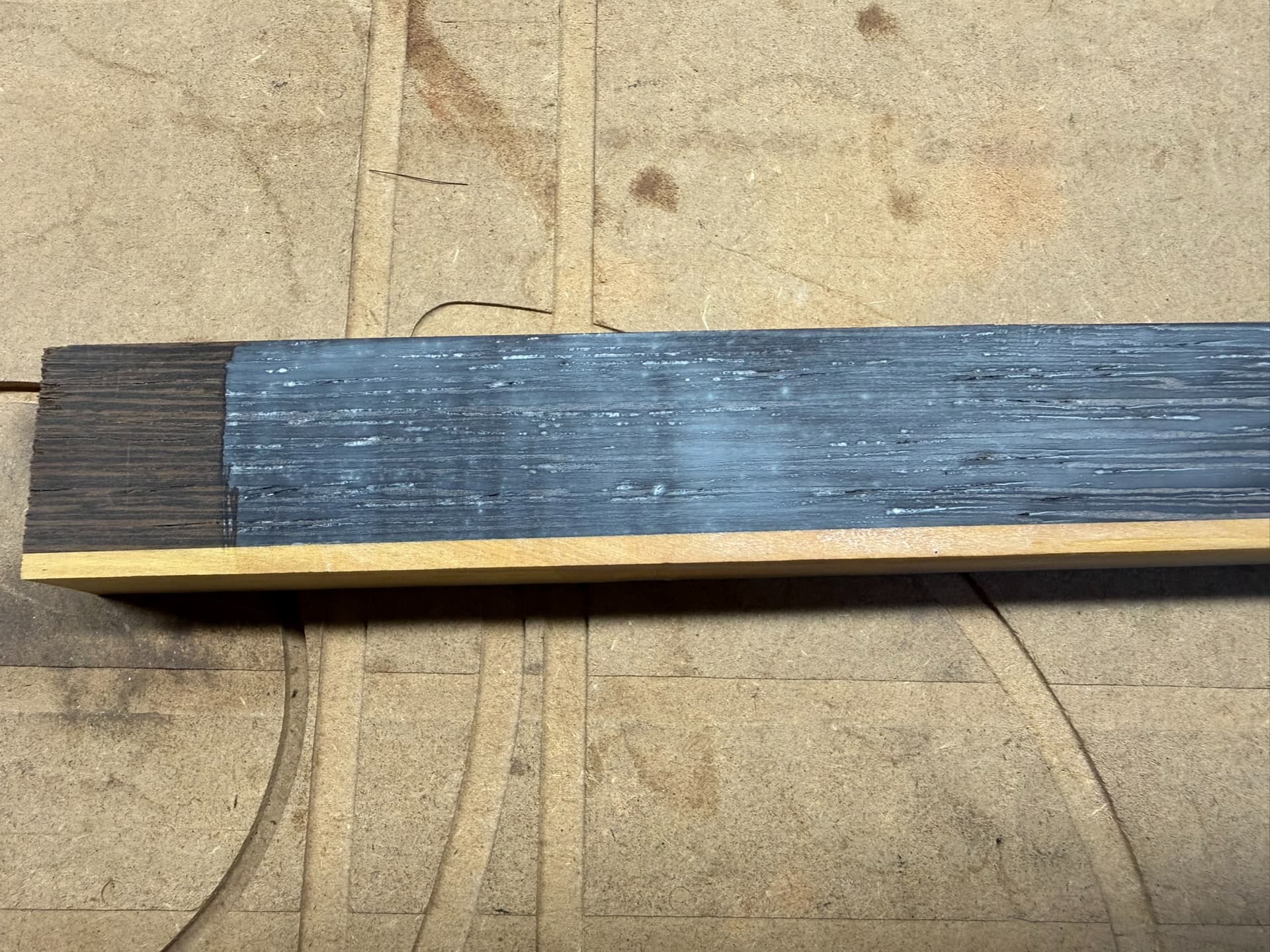
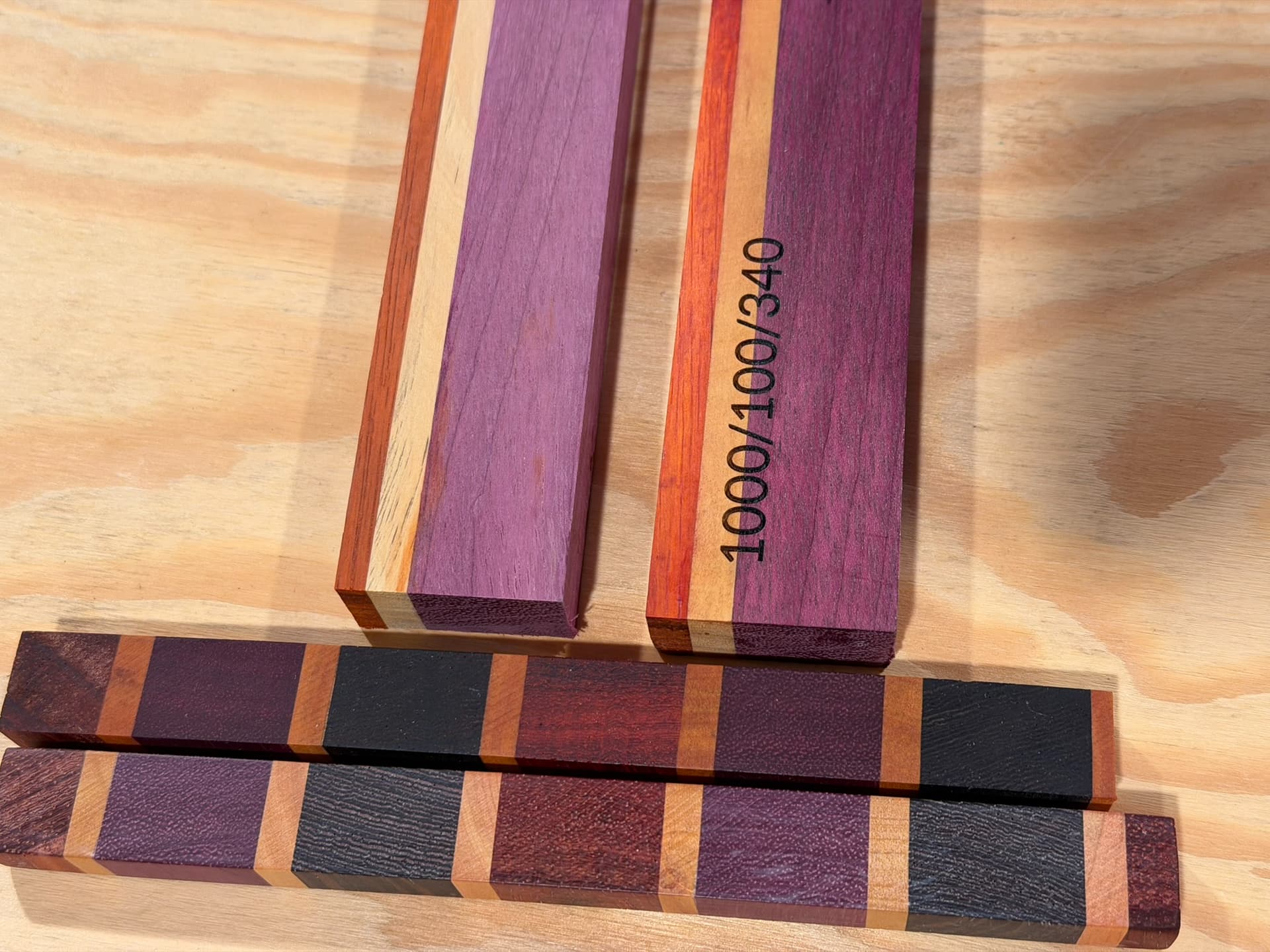
I don’t know anything about wood finishing, and after a bunch of research and experimenting on scraps, decided to use “Osmo Polyx-Oil”. I like the way it’s turning out, but the problem is where it got into the engraving I couldn’t wipe it off, and as you can see it gets into the grooves and leaves a white reside. It’s not the end of the world and I don’t think it ruins the piece, but I can’t unsee it. I can’t really think of any way to “fix” it at this point (I’m not going to do an inlay or try to fill this in with something - I’ve risk enough damage to a thing that has taken me 3 weeks to make, and we’re out of time). But maybe someone has a clever idea.
This turned out amazing. I don’t have much else to offer other than trying one of the other oils used for wood to see if it might at least mute the residue.
This is killing me as this is a great peice as always with you but once you point out the white … Maybe like so many small things like this if you can not point it out it will never be noticed by anyone but you and us?
that or what @rvogt suggested and see if a second oil might eliminate or mute it.
Not a bad idea, I can test it on a scrap piece first. I was originally going to use polymerized tung oil or “furniture butter”. I know nothing about wood finishing, so I bought these because they were low VOC and this time of the year it’s hard to leave the windows open. But I tested them on some offcuts and they made everything dark brown. That’s when a chatbot told me those kinds of oils darken exotic woods. But maybe now that’s what I need.
Very beautiful, especially your choice of woods. You are going to be your worst critic. I bet that is what you see first, but I doubt others will see it like you do. I wouldn’t do anything to it. It looks great.
are those white spots embedded into the grain? or are they superficial enough you could use a pair of tiny needletipped tweezers (i use the ones from my wife’s old college dissection kit) to carefully pluck them out?
future thoughts. the two oil finishes i use regularly haven’t done that to me, so maybe they’re worth considering down the line. i use both walney’s walnut oil and howard’s feed and wax. feed and wax can be tougher in an engrave because there’s wax in it that kinda smooths out with the action of rubbing it in. but the walnut oil works really well on engraves and that’s my go-to.
and one that doesn’t necessarily help with your engrave, but can help with an unengraved surface that has a grain that has some “depth” to it like you have in some of those pieces of wood. you can use a “grain filler” that will fill the grain in clearly and then you sand over it again. it will help give your wood a more “glasslike” finish when you sand it down to 800 or 1000 grit. i used that on a wenge box i did a few years ago.
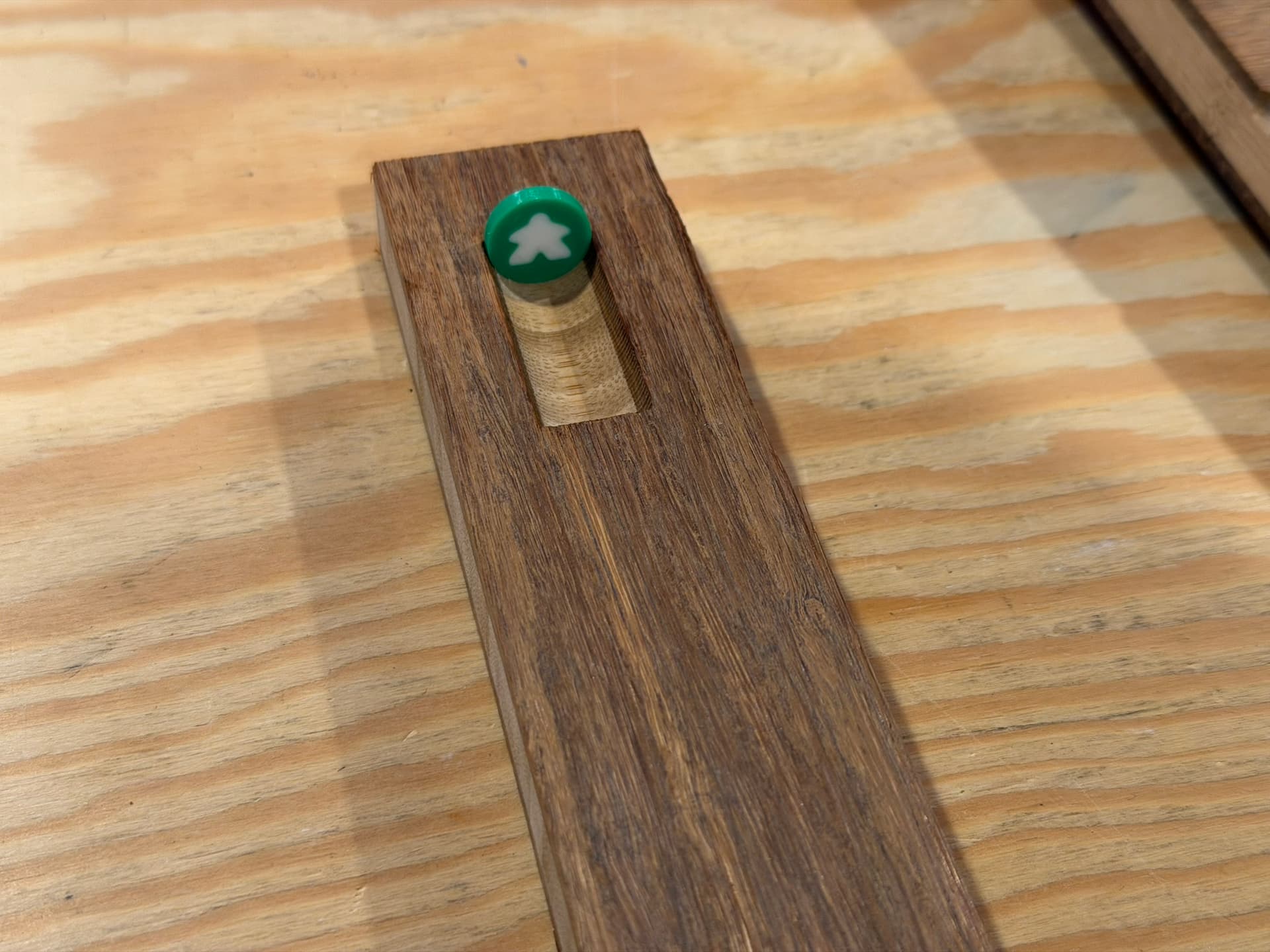
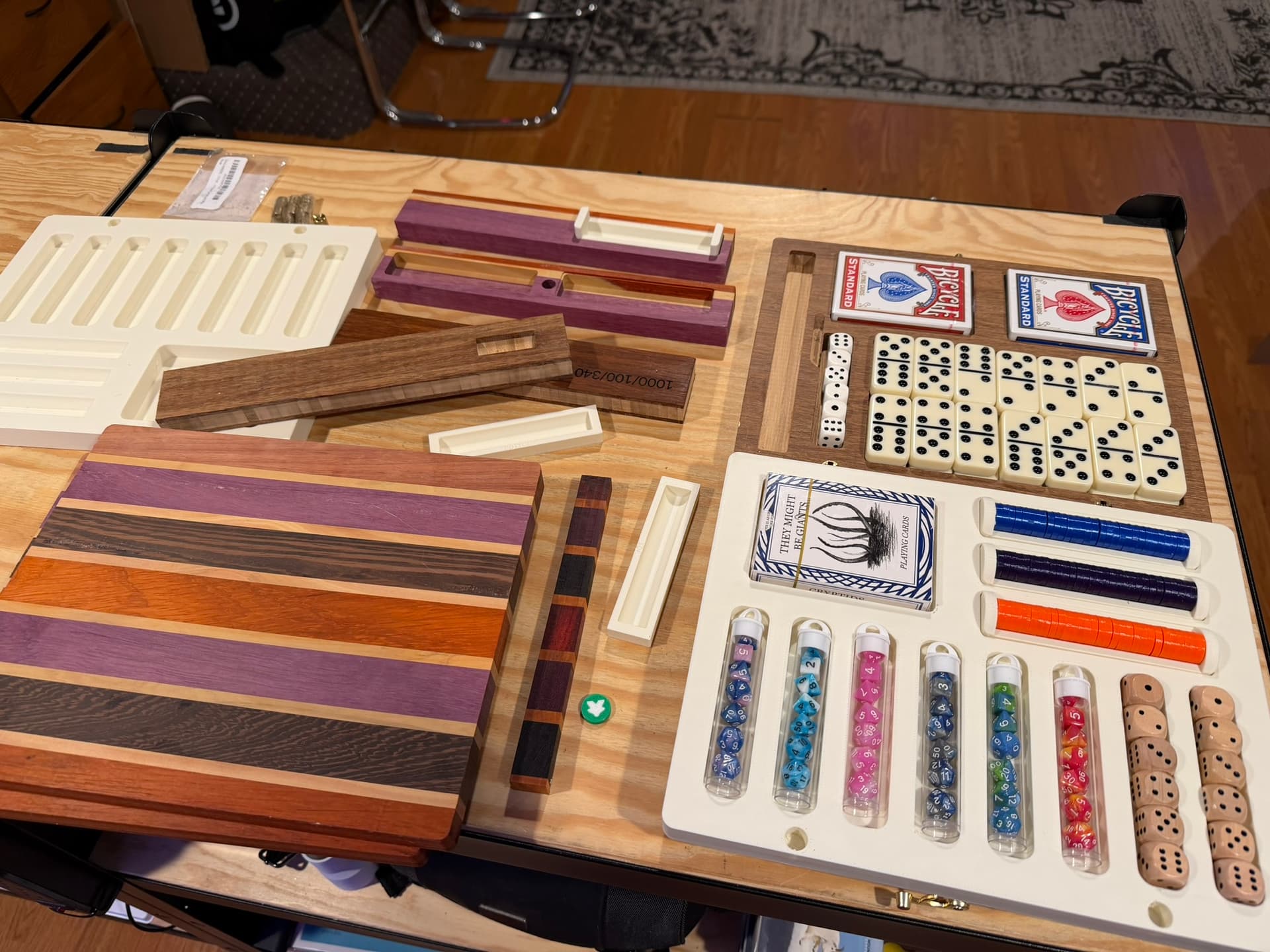
I was entirely inspired by a project from CIC Workshop, and I bought the wood (and project file - support creators) from them, so full credit there, and I’m very satisfied with the quality. Building theirs was a good opportunity to re-learn how to use the Shaper Origin and make my mistakes on the sacrificial piece. Then I did my own design from scratch because I wanted something custom for the tabletop gamers this is a gift for, and because it’s always a learning experience. E.g. at first I spent a lot of time figuring out how to machine out a semi-cylindrical channel to hold the 3D printed meeple tokens (I have no idea what these words mean but I’m told the board gamers will appreciate them)
But then my partner was looking at one of my 3D printed test files and suggested it could function as a tray to make it easier to take them out of the box, which turned out to be a much better idea, and simpler to make. I really enjoy all of the experimenting that goes into these things, and the hardest part is to let go of the tests and focus on finishing it in time for Christmas.
Thanks, that’s good information! I hadn’t considered trying to pick out the white bits. I just tried and it sort of works, but even with my patience for doing extremely tedious things while staring into a microscope, it would probably take forever. After it’s fully dry, though, it gives me hope that a stiff brush and a strong vacuum might actually dislodge a lot of it. There are some places that are more of a discoloration than chunks of white, though, like inside the palm tree. I think this stuff has a white pigment in it and that’s part of the reason they’re not kidding about applying it thin. I put some on a test piece to see if it would dry clear and… it does not.
By “done that” I don’t know if you meant darkening the wood or turning white in the engraves. I don’t want to name my source here, because I strongly believe that any post containing “I asked ChatGPT” is not worth reading. …But after I experimented with two products from Walrus Oil, I did some “research” which suggested that oil finishes can darken wood, mute vivid species, and turn purpleheart brownish, which matches what I saw:
The bottom stick is “furniture butter”, the one above that is “polymerized tung oil”, both from Walrus. Top left is the untouched wood and top right is Osmo Polyx Raw. The top suggestion was actually dewaxed shellac followed by 3 coats of water-based polyurethane, but I didn’t think I could take the time or the smell. I’m just doing two coats of Osmo and shipping it.
Good info, as I said I know nothing about wood finishing, so I’ll store that for reference. In this case, I considered whether I wanted a super smooth finish and I decided against it. I would have been happy doing nothing, apart from a little sanding to knock down the sharp edges, since I really like the raw wood and I think it works for this box. But I guess that is not good from the warping and splitting and staining perspective.
yeah, unfortunately, the grain filler is unhelpful for the engrave itself because you have to sand it smooth. and it don’t use it that often, but when you want htat smooth glass finish, it’s a lifesaver. we definitely use it on guitar bodies. especially if we’re painting.
yes, all oils darken some, but how much really depends on the oil itself and the type of wood. always test test test like everything else.
the “done that” was the white flecks. i’ve never seen that before.